How AI is Changing On-Site Search


AI tools like ChatGPT are reshaping how people search, not just on Google, but on your website too. If your on-site search still behaves like it’s 1999, your visitors are going to notice.

The last two years have been rocked by the explosion and acceleration of AI. Efficiency in some areas, job losses and gains in others – new tools, job positions, ways of working, etc. 

We’re just starting to encounter a new shift – how website visitors search when on a website. 

This is commonly called “on-site search” – it is the familiar search bar within a website that you might reach for if you can’t find what you need via the menu. It could also be the search bar atop a Resource Hub, knowledge-base, blog, documentation portal that you use to search out useful information.  

How people use this search bar is facing a major pivot. 

If you don’t soon pivot with the user behavior change, your site will suddenly be outdated and frustrating your visitors. 

What is the origin of this search behavior change? 

It is of course AI usage. More and more people are starting to utilize ChatGPT, Grok, Copilot, Gemini, etc. The tools are being integrated into all the things. (we have a post coming on AI exhaustion…) 

What was once an elite play area reserved for brave technologists is now quickly becoming mainstream. My wife uses it, my parents, and many of our clients – even the aged elder boomers! (No offense to the above parties) 

Long-form Search Queries

In the previous era, when you needed to use a search bar, you took the concept or question in your head and tried to pare it down and condense it to 1-3 words that you thought might return good results. 

You would perform a search like “healthcare trends” or “tuition cost”. 

Users are starting to think differently.
New tools are training a new way of interacting. 

The new searches are becoming more like “what are the hot healthcare trends in 2025?” and “what is the annual cost of tuition”. The user might even be using speech-to-text so their searches are even more verbose.  

The search queries are becoming more specific and they are expecting a best-fit answer. 

Can you see the problem? 

Right now, most on-site search tools will get tripped up, the more words in the query. The search tools can’t tell which are the important words. It can’t know that you are interested more in content around “trends” than specifically “2025” or “hot” in our above example. 

Natural Language Search

Besides just the pure length (# of words) in queries, people are starting to re-adopt natural patterns of speech. Our tracking of search phrases on client sites is starting to prove this trend. 

People will now start to search the way they would actually pose the question to a friend. A search for “Prerequisites” becomes “What are the prerequisites to applying?” 

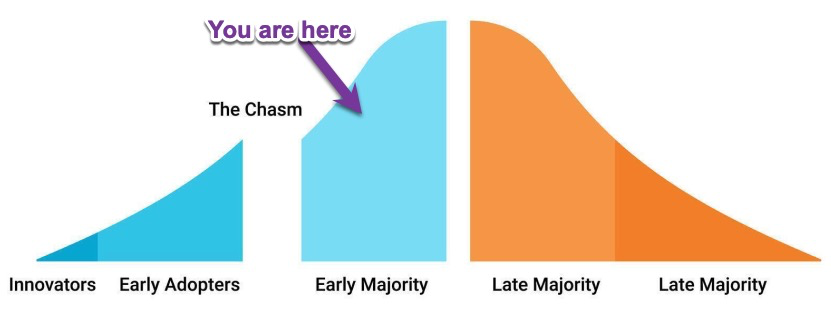
Technology Adoption Lifecycle for AI Search
What AI-Powered Search Actually Does

When search is AI-powered, it better understands the intent of the user’s search rather than just traditional keyword matching. It can utilize powerful language models to automatically: 

  • Understand synonyms (e.g., “enrollment” vs. “registration”)
  • Decipher sentence structure and intent
  • Read into Context (e.g., distinguishing between “apple the fruit” and “Apple the company”)
  • Score relevance of content beyond simple keywords
  • Accommodate follow-up / conversational queries

Big players like Shopify and Notion are rolling out AI-powered search. Mass adoption is next. 

The Implications for Your Website’s On-site Search

1. You may now need AI-powered search

If your visitors expect natural language search and your site falls short, you’ve just delivered a frustrating experience.

Instead, if you have an AI that has indexed your content and can understand sophisticated queries and deliver them exactly the content they need… big win. 

Right now there aren’t many easy-to-add or cost effective options for AI-powered on-site search. (Spoiler alert: we are working on something to change that) 

Frankly many brochure-type small business sites get very little search volume. For them this may be a low impact issue for a year or two. Eventually all search is going to be AI-driven or at least incorporated to some extent. The use of sentiment analysis and providing true relevance is an inevitability. 

I remember when a website being mobile friendly or having an SSL cert to secure it https were optional. 

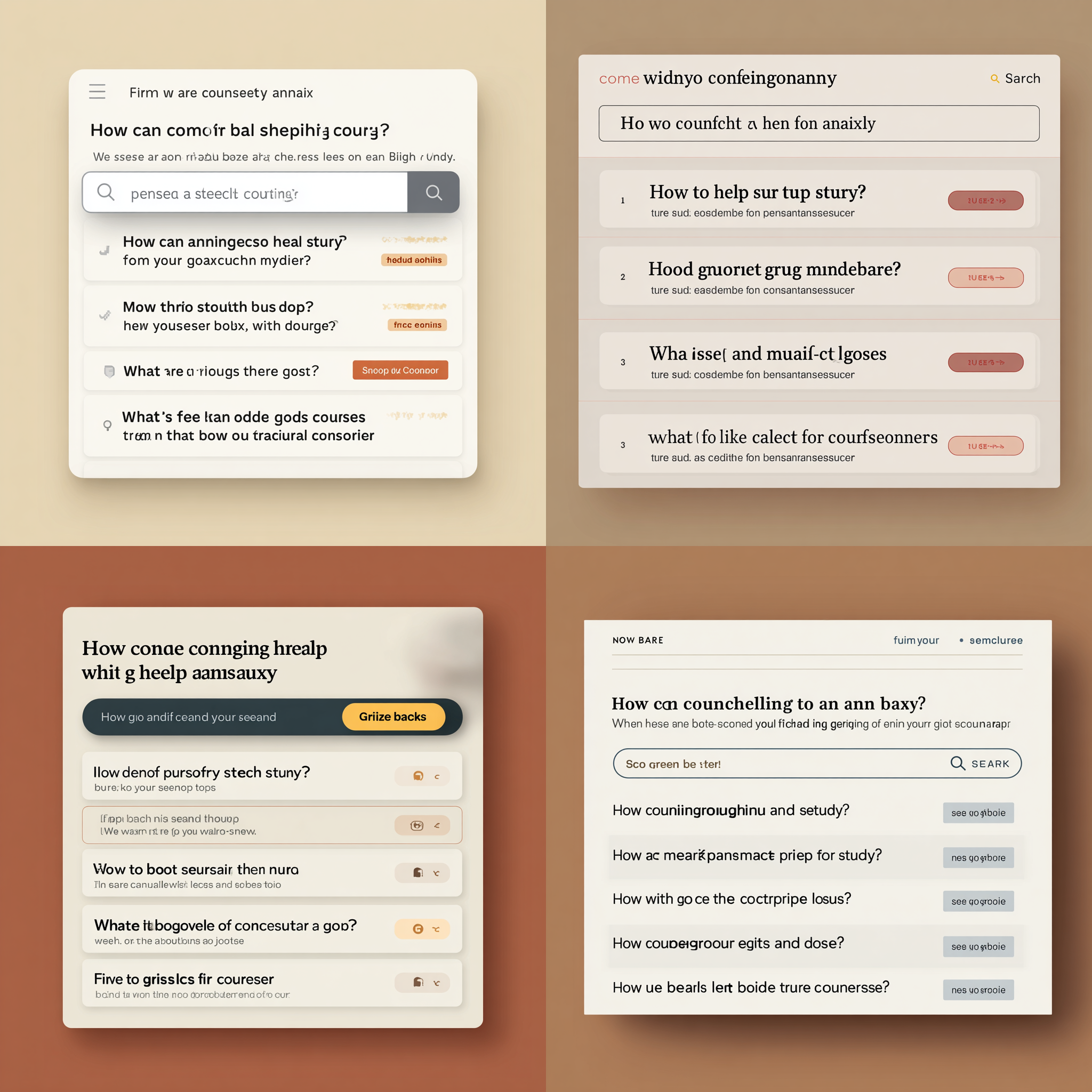
2. Placeholders and Suggested Searches are key hints to make AI search work

When a visitor sees your search bar, there are subtle visual cues you can provide so they know they can use more sophisticated queries in your search engine. 

Placeholder Text

This is the text that shows up within the search input field. Use this to give an example search that is more sophisticated. 

Suggested Searches

Consider having 4-6 queries right below the search bar that they can either click to search or at the very least this will give them the idea of the kinds of questions they can ask. 

The AI tool nomenclature is prompt suggestion and here is a great article digging into how to do prompt suggestion right

Bonus: populate these with your most common searches. 

Bonus II: Don’t show the suggested searches until after a click on the search input box. 

Even a simple (AI generated) mockup shows how these subtle cues can improve search engagement.
3. Your search bar may need to be wider or expand

If you type or speak a long sentence but the search bar can only show 2-3 words that could be a challenge for the user. 


I think we’re going to see wider (and larger) search bars to allow for long phrases but also visually it is going to tell the user “this is a really helpful tool, use it”. 

What are the positive outcomes from implementing AI-powered on-site search? 

I like to think of success tracking in three groupings

  1. Overall website stats (think pages per visit, time on site) 
  2. Your Key Performance Indicators (fewer support tickets, more conversions) 
  3. Search engagement metrics (searches per visit, clicks on results) 

COMING SOON – Read more in our article “Is Your On-Site AI Search Working? Here’s How to Measure It”

Ready for AI search now? 

We’re building a tool to make this kind of advanced AI search easy to install, cost-effective, and tailored for WordPress and content-heavy sites. 

Want early access? Check out SearchRovr, our answer to On-site AI search for WordPress

Should your agency clients have direct access to a developer?

Earlier this week, we had a great call with a new contact at an existing client. We were investigating ways to improve workflows and help their team generate more, quality content for their blog. As part of the call, I saw a quick win we could provide that day to reduce friction in editing their content. As a developer, it was something I instantly knew a solution for that a project manager or customer support person might have missed.

Why wouldn’t a client always have access to a developer?

A developer’s time can be expensive. Particularly with the way most developers work. Having dedicated time and focus for work is precious. Taking thirty minute breaks to join meetings throughout the day can torpedo their productivity. 4 hours of development time scattered throughout the day is less productive than 2 hours of dedicated time.

Having a project manager, or a “client success” manager, is great to help mitigate this impact on a developer’s time. However, this can be a trade-off in efficiency on the client’s budget. You will not get as much bang for your buck with this approach.

Hold up there bucko!

Every agency person just put their coffee down to draft me an angry response! Well, we don’t have comments on this blog so you’ll have to send them in an email.

But, jokes aside, I don’t mean that as a negative against that approach. For most clients, they need a project manager. They need someone who’s primary job is to help define their goals, plan how and when those goals will be accomplished, and manage the team to get them across the finish line.

Additionally, as a client, if you’re worried about the competency, sustainability, and health of your partner agency, you’d be happy to have someone leading in this way.

But can the disconnect be too far?

We first connected with a client nearly a decade ago when their Salesforce agency needed someone on the client’s side to handle website updates related to a special project.

Our client brought us in to develop an API on their sales / checkout process that the Salesforce team could utilize with their connection. We had an initial call with their developer to get an understanding of what they were looking for from us. It was a high-level call where the next step was investigative and would require a follow-up and final approvals on the process from their team.

We never had another meeting with the developer. All communication was done through the project manager and the developer rarely responded directly to emails.

We finally received a plugin of their connection. It was a single php file labeled magic.php.

I was forced to guess what they wanted based on the structure of that file and eventually just modified their code to create a connection that would work.

Where LimeCuda falls on this spectrum

If you need a developer, you have access to one. We don’t gate keep development resources. In fact Blake and I as “project managers” were pushing pixels before we were managing projects. I’m the lead developer for LimeCuda and if there is a need for me to look into something, give my opinion, or strategize on different approaches, I’m always available to help.

That’s what makes us a little bit different.

In the Age of Endless WordPress Themes, Why Choose Kadence?

Editor’s Note: The below post is written by one of our developers. The theme framework he describes powers many of our current projects.

There are so many WordPress themes out there, it honestly gets overwhelming. I’ve tried a bunch. Some looked great at first, but once I started building, things fell apart. Too many settings, slow loading times, or just that weird feeling like the theme’s working against you. It shouldn’t be that complicated.

When we started using the Kadence Theme with Kadence Blocks, things were looking a little different. The layout builder made sense, the global styles were actually useful, and I wasn’t constantly digging around to make things mobile-friendly. After hopping between builders for a while, I kept coming back to Kadence. I still keep an eye on what’s out there, but Kadence is the one I rely on when I just need to get good work done!

What’s different about Kadence?

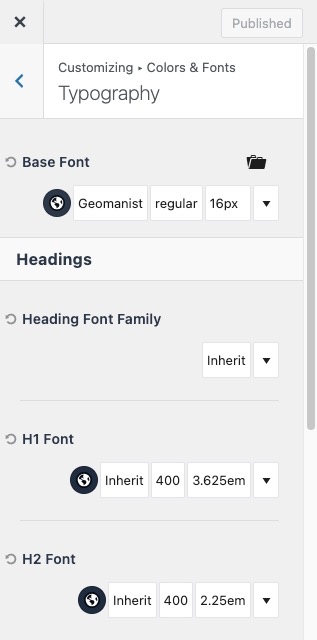
Kadence isn’t just a single theme with everything baked into it. It is a framework with plugins that allow you to add additional features based on your needs for a given project. Using custom fonts? There’s a plugin to make managing that easier. Want to add a full design library and store all your custom layouts for easy reference? There’s a plugin for that! 

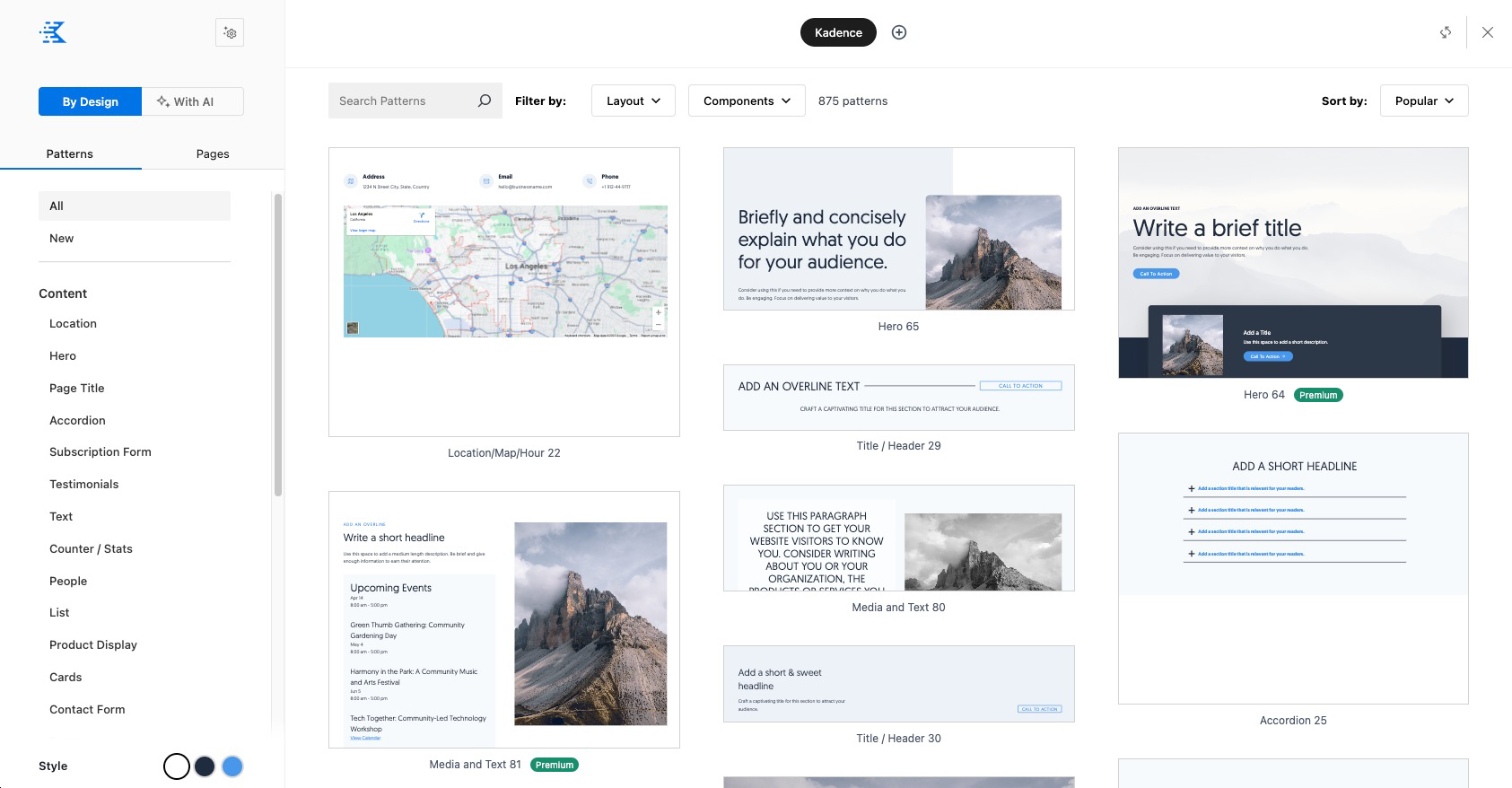
Kadence’s built-in design library

Overall, the framework just feels intuitive. You don’t need to fight with controls or overly opinionated styles to get clean layouts. Whether I’m adjusting global colors, building a custom header, or tweaking blocks for mobile, it all feels smooth and logical. Kadence gives you full control without the clutter.

What about under the hood?

That simplicity shows up under the hood too. The way it handles its file structure is thoughtful. It’s lightweight, well-organized, and easy to follow when you’re working under the hood. You’re not left guessing where things are or dealing with theme files that feel like a maze. It’s straightforward, which makes debugging or extending so much easier.

On top of that, most of the frontend output is handled through PHP templates which can be filtered using traditional WordPress hooks. That means you can tap into WordPress actions and filters to customize blocks the right way without overwriting core files.

In a space filled with bloated templates and overcomplicated setups, Kadence feels like a clean start. It’s fast, flexible, and helps you focus on actually building something that works.

In the Age of AI, Why Create Anything at All?

It’s painful. You might even feel a sense of despondency or cynicism. With just a quick prompt, an AI tool can churn out a surprisingly solid blog post. And, let’s be honest, you might hate to admit it, but it’s not half bad. So… why even try?

I’m here to tell you: don’t give in to the woe-is-me mindset. Don’t give up. You can still compete. You are still needed. If you don’t create, what will the AI models have to learn from? (just kidding, too soon??)

In fact, now more than ever, your humanity is an advantage.

“Real is the currency of the future.”

– Michael Foster

In the age of AI, content is cheap and everywhere.
What sets you apart now is your opinion and your stories. Share those.

“Those seeking success in Google Search should be looking to produce original, high-quality, people-first content demonstrating qualities of E-E-A-T.”

Google

The fascinating thing about E-E-A-T – expertise, experience, authoritativeness, and trustworthiness, is that these are uniquely human traits. Even when you’re writing on behalf of your company, it’s the people behind it who embody expertise and build trust. It’s people who give your brand authority and credibility.

Yes, we can use AI to help shape our language or explore ideas, but truly valuable content, the kind that connects and converts, still requires the perspective of someone human.

And let’s be honest: people are already tuning out the obviously AI-generated stuff. Someone recently joked that LinkedIn is just becoming a giant feed of posts written by AI, and ignored by humans.

So be real.

Share your perspective. Let your humanity shine through. Maybe your post won’t be a perfectly polished listicle, complete with bold headings and clever emojis—but if it’s you and you have something worth saying, then you are still relevant.

WordPress term archives for your Astro site

In our last post, we talked about embracing new technologies without having to completely abandon existing infrastructure. For us, finding ways to embrace fast, flexible, and modern frontends while not having to abandon longstanding and well-loved WordPress content management structures for some of our clients has been an enjoyable endeavor.

All little on page templates.

In many ways, creating page templates for Astro projects is very similar to WordPress, as much as a PHP template can be the same as an Astro template that is.

But there are some key differences to consider…

In WordPress, we have a file structure within the theme that maps to the content getting called. Your files and file structure aren’t dictating the structure of your site, they are just responding to a route that has been created and called by the application, WordPress. So, for example, if we have a taxonomy we’ve created for “topics”, the application will create an archive for topics. Us creating a file called archive-topic.php doesn’t tell the system to create that route, only that when that route is called use that template. If that file didn’t exist, the system would look for a generic archive.php template and render the content with it.

With Astro, you have a little more control (some would read that as responsibility) in creating the structure of the site. We can create folders, dynamic routes, nesting, etc. to tell the application what the structure of the site will be and give it templates when building the content we define. At every file where content will be created, we add a getStaticPaths method that tells the application what content we want to build with that template and to generate those pages.

And now for the archives.

So, when we use an application like Astro to create a frontend with our WordPress content, we have to do a little more work to create the term archives that are automatically created within WordPress.

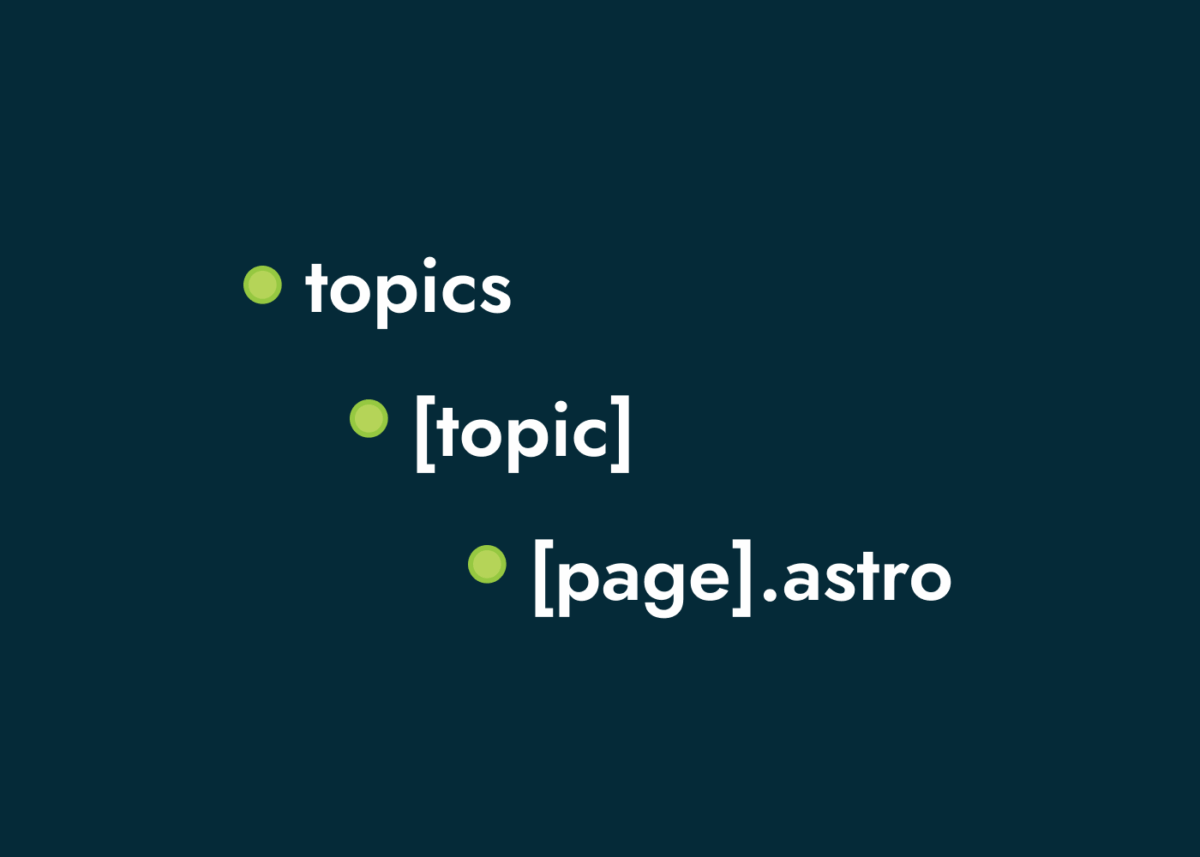
  1. Create the file structure for routing the paths for the archives. When we add files here, we can take advantage of Astro’s structure for creating dynamic routes as well as paginating them. (pages > topic > [topic].astro & pages > topic > [topic] > [page].astro).
  2. Within our [topic].astro file, we’ll create a typical getStaticPaths build out where we call all of the possible slugs (using a collection) for that route. However, rather than building out a page of content associated with that topic here (which you very well could within this template), I like to rewrite with the first page of our paginated archive response. return Astro.rewrite(`/topic/${topic}/1`);
  3. I would then utilize our [topic] > [page].astro to build out the paginated archives for each topic that we have. For this, we’ll pass both the topic and the collection of possible results (posts) into our getStaticPaths method on that file. We check the posts to see if they are associated with the current, dynamic content and then pass it to the return if it is.
  4. At this point, we have all of the posts but we haven’t separated them into chunks to display on paginated results. To do this, we use the paginate function on the return to chunk them and have Astro create the associated numbered pages.

Here is a breakdown of our paginated archive paths using this approach.

export async function getStaticPaths({ paginate }) {

  const topics = await getCollection("topics");
  const resources = await getCollection("resources");

  return topics.flatMap((topic) => {

    const filteredPosts = resources.filter((post) => {

      const topicNodes = Array.isArray(post.data.topics?.nodes)
        ? post.data.topic.nodes
        : [];

      const slugs = topicNodes
        .map((topic) => topic?.slug || "")
        .filter(Boolean);

      return slugs.includes(topic.data.slug);

    });

    return paginate(filteredPosts, {
      params: { topic: topic.data.slug },
      props: {
        topic: topic.data.slug,
        name: topic.data.name,
      },
      pageSize: 16,
    });
  });
}

Curious about other templates when switching to a headless approach? Drop us a line and we’d be happy to chat.

Have you seen it? This is the next big thing. “We have to adopt this or we’re NGMI!”

Have you ever watched Silicon Valley? It is one of my favorite shows that I do find myself revisiting every couple of years. The secondhand cringe watching these characters fumble their way through building a startup is just wonderful.

The intro for the show includes animations that evolve each season showing real brands come along, grow, and then fade away in a quick time lapse. The era we’re currently living in with AI, the speed of these changes is no longer a time lapse, it’s real time!

The changes are big and they are happening fast.

It seems like every week there are upgrades, new tools, approaches that could literally re-define how we work. We’ve seen, at almost every level, people hitting the “ngmi” (not gonna make it) mantra and the existential fear associated with it.

Don’t get me wrong, we need to pursue, investigate, and implement AI today. It is a powerful tool and the applications are almost limitless to help us become more effective and efficient in all that we do. We are only limited by our creativity. The problem is, with all the rapid change, we can be easily tempted into crippling ourselves with opportunity. There is so much we could pursue but how much should we pursue? And, once we start pursuing, we can’t abandon it for the newest tech that releases each week.

The fundamentals are still the same

AI is a tool that completely upends how we work. But, fundamentally, the what that we’re working on is essentially the same. There are some silver bullets out there, but your business, organization, career wasn’t built on silver bullets, hasn’t been sustained by silver bullets, and won’t be made or broken by whether or not you choose the right silver bullet in this rapidly changing world.

Focus on the fundamentals of your business! You have a product/service you’re selling to your target audience. You have a message that you need to deliver to the right people at the right time. You want to deliver that product in the fastest, most efficient way possible with the best possible customer service.

Deciding which tools to use should be centered around helping you perform these fundamentals better, not on chasing the shiniest new toy.

What does that mean for us and your website?

There are so many new, shiny tools for us to use! And to be honest, I do enjoy playing with them. But, the fundamentals of a good website and a good web strategy are still the same. Do we implement tools and processes that help us to perform those fundamentals better? Yep! Do you need to completely upend your tech stack to use the latest and greatest? Nope!

One of the greatest benefits of the many frameworks that we have available to us, is that you can start to embrace new technologies without completely upending what you’re currently doing. Using WordPress and want to switch to a headless frontend so you can utilize more AI coding directly? Use WPGraphQl and a framework like Astro to take all of your existing content to a new frontend. Have an existing site but want to start building targeted landing pages using a dedicated AI platform? You could proxy the pages through your existing site and utilize both!

With all of the excitement and noise we see everyday, it can almost be overwhelming and crippling. Don’t let it get the best of you. Remember:

  • Focus on the fundamentals, make a decision, run with it.
  • Don’t crush yourself with shiny and new! You can embrace new techniques without completely abandoning an existing architecture.
  • Afraid of having to change in the future? Most systems can compile down to a REST or GraphQL data structure than can be consumed by many different frontends. Changing isn’t inconsequential in the future but it is nowhere near a “starting from scratch” that we might fear

Get faster build times for content updates on your large content Astro site

When building headless, there are generally two approaches, Static Site Generation (SSG) and Server Side Rendering (SSR). The essential difference between these two approaches is when the static content is generated. For SSG, all of the site content is turned into static files at the time the site is built. For SSR, the files are turned into static files as they’re requested – once a file has been requested, it becomes a static file for all future requests (visitors) to that page.

Each approach has its own drawbacks and benefits, but I love SSG for our headless websites. They make for the most performant sites and with a framework like Astro, we can capitalize on some of the benefits of SSR not usually available with SSG (ex. Islands).

The biggest drawback with SSG is that the entire site has to be built at build time. If you have a site with a couple dozen pages and a few hundred blog posts, SSG builds wonderfully. However, a site with hundreds of pages, thousands of posts, and thousands of terms, can take forever to build. Almost an hour in some of our test cases. These builds are not only slow, they can cause performance issues on the server providing the content (WordPress in most of our cases) or memory issues on the server building the site (Netlify in most of our cases).

We can do better than that!

When we need to do a complete site build, there are some limited options we do have to help us improve performance. We can batch our request and cache our source endpoints (WPGraphQL Smart Cache) as well as utilize Astro data stores in the content loader.

But, this can still be a drag for content editors wanting a quick publish experience from their CMS. Getting a build that fully utilizes our cached data store in Astro while updating it with just the latest published / modified content is critical.

Getting incremental with Astro

So, for our objectives we need to:

  • have a way to trigger a build from content updates within WordPress
  • have builds triggered there tell our code that this is a content update
  • only update modified content within our data store
  • keep the ability for full data rebuilds when code updates trigger a deploy

Triggering builds within WordPress

We can trigger builds within Netlify via a webhook. When updating content, you can hook that POST request to your webhook via the save_post action within WordPress. You could also use a plugin such as JAMstack Deployments to quickly configure you build hooks and build image URLs.

For the build hooks, Netlify does allow us to append query parameters to them to modify some of their default behavior. For our builds triggered via WordPress, I append the parameter for trigger_title which will update how that deploy displays within our Netlify dashboard as well as be accessible within our Astro file for our content loader. So, the build hook we trigger specifically from WordPress would look like:

https://api.netlify.com/build_hooks/${hook_id}?trigger_title="wp-content-sync"

When that hook is triggered, we can access the value using the INCOMING_HOOK_TITLE via the Astro import meta:

const INCOMING_HOOK_TITLE = import.meta.env.INCOMING_HOOK_TITLE
  ? import.meta.env.INCOMING_HOOK_TITLE
  : "";

With this, we can conditionally modify our GraphQL requests to call just the last modified posts and not iterate our request to get all of the posts (like we would for a full site build).

const postLoader = async (after = null, results = []) => {
  let hasNextPage = true;

  const query = `
    query GetPosts($first: Int!, $after: String, $orderby: PostObjectsConnectionOrderbyEnum! ) {
      posts( where: {orderby: {field: $orderby, order: DESC}}, first: $first, after: $after ) {
        pageInfo {
          hasNextPage
          endCursor
        }
        nodes {
          id
          title
          slug
          ... query
        }
      }
    }`;

  const variables = {
    first: 2,
    after: after,
    orderby: INCOMING_HOOK_TITLE != "wp-content-sync" ? "MODIFIED" : "DATE",
  };

  const url = "https://example.com/graphql";

  try {
    const response = await fetch(url, {
      method: "POST",
      headers: { "Content-Type": "application/json" },
      body: JSON.stringify({ query, variables }),
    });

    const result = await response.json();

    const posts = result.data.posts.nodes;
    const pageInfo = result.data.posts.pageInfo;

    hasNextPage = pageInfo.hasNextPage;
    after = pageInfo.endCursor;

    results.push(...posts);

    if (INCOMING_HOOK_TITLE != "wp-content-sync") {
      if (hasNextPage) {
        return postLoader(after, results);
      }
    }

    return results;
  } catch (error) {
    console.error("Error fetching posts:", error);
    throw error;
  }
};

Pulling only this latest content, we can bring the build time for a site that normally take 30+ minutes to build with thousands of pieces of content plus archives down to just a couple of minutes while still maintaining full site builds when pushing code updates.

Behind the scenes of the new LimeCuda.com

We’re excited to have our new website launched! It was way overdue but also something that will be a continual work in progress. We’ll be updating here as we continue to embrace this new site and new strategies for our own content and brand.

Under the hood

I’m currently writing this blog post in WordPress. But, if you were to inspect this page, you wouldn’t see anything you’d expect to see from a WordPress site.

In a traditional site managed by a content management system (CMS) like WordPress, the frontend of the site (the part that you’re viewing right now) is directly tied to the backend (where the content is created and edited). They live on the same server within the same application.

Our new site is headless.

This means that the frontend is completely separated from the backend. Yes, I am writing this blog post in WordPress, but you’re not accessing this content via WordPress. You see, this website is a fully static site. You’re seeing a simple HTML file being served up by our Netlify server. When we update or add new content in WordPress, these static pages are built, pulling JSON data about our content from WordPress and creating static HTML files that are served up to you!

Our framework of choice for this frontend? Astro.

But what does it all mean?!

This might not mean anything to you, and that’s OK! For us, it means flexibility for content and data sourcing, super fast site loading, and an overall more secure website.

Flexible content sourcing

The flexibility in data sourcing is one of my favorite parts! For this site we are:

  • Sourcing data for blog posts from our old WordPress site for LimeCuda
  • Sourcing pages from a new WordPress site where we have Gutenberg and Kadence working together to make building pages with our new layouts quick & seamless. The data for the blocks is pulled into components for each within our Astro project.
  • Case Studies driven by raw JSON files. No real reason… I just wanted to test it out with Astro’s content loader. And it works great! JSON isn’t a language you really write in. But, in this case, I don’t hate it and it lays a foundation which allows us to pull a case study from almost any builder application we may choose to adopt.

Speed

Since the files we’re serving up don’t have to pull data from a server, that instantly reduces the load time. This, along with the optimized components for serving images and delivering assets provided with a framework like Astro, makes building fast websites much easier than fighting cache settings in a conventional website.

Better security

Since the site accessed by the public is detached from the application managing the content, there isn’t a direct link between them. In a traditional site structure, the code presenting the frontend is all included in the potential attack vector for accessing your primary site application.

Ready to go headless?

Wondering if this headless stuff might work for your website too? Drop us a line and we’ll chat about whether it’s a good fit for your project – no pressure, we’re just web nerds excited to talk shop.

Thoughts on AI for the hesitant adopter

It’s everywhere. If you listen to the futurists, it will completely upend all industries and at all levels. How will it upend? We’re not sure yet. Some speculate that the rise of AI will lead to full employment of everyone while others claim the aim is 100% unemployment with all of us replaced by the machine.

With AI invading conversations in all industries and the options to implement growing rapidly, almost everyone has their thoughts on AI. And that is to be expected. But, the interesting thing with AI, it seems everyone also has feelings about it. And these feelings can be strong even if our actions don’t align with our feelings. A new study shows many Gen Z adopters are heavily utilizing AI for work while also fearing AI will replace them.

How are you feeling about AI?

When you hear “AI”, what do you feel? Are you excited about the opportunities it brings? Do you imagine all the annoying tasks leaving your plate? Do you see efficiency, easier access to information, and automation of all the things? Or, are you fearful of what it means for your business, for your job, for your entire industry? Do you become anxious about what providing for your family is going to look like in 5 years? In 2 years? Next year?!

AI doesn’t care how you feel about it

If you’re on the excited side of the spectrum, you’re already using AI tools and working on how to integrate them into your workflows. That’s great, keep it up!

If you lean toward the fearful side of the spectrum, you might need to hear some hard encouragement. Your feelings about it don’t matter. No matter what the actual impact of AI ends up being in 5 years, you need to start engaging with it today. If you are in a job that can utilize AI, you will need to either figure it out or get left behind. 

Continuing to avoid AI will be like trying to assemble a car with a screwdriver when an electric drill is available to you. Yes, it is possible, but you are going to be at a disadvantage compared to someone getting a more efficient, higher quality result with AI. 

Where to start with AI?

If you’re a reluctant adopter, let me encourage you to start small.

  • Use ChatGPT to write an email. Put the idea for the email, some thoughts about the tone you want to convey, and what you hope the response to be. Then, let the bot write your first draft. Clean it up to add back some of your own style and send it on!
  • Next time you have something that is a repetitive or annoying task, Google an AI solution for it (or have AI give you suggestions!). Within the last week, I’ve found new AI tools, or created new tools using AI, to do everything from enhance a blurry video, generate 3d print files, convert PDFs into text to feed an AI-driven legal search, and automate screen record videos for the case studies on our new website. All of these would have been much more difficult, or even just forgotten about, prior to using AI.

If you’re interested in using AI for your business but not sure where to start, reach out for a casual conversation. We’d love to geek out over ideas for your business and AI.

Don’t Let Website Visitors Lose the Scent

One of my dear mentors hammered down this concept in a class on “E-Commerce”. When people come to your site there is a “scent” they are following, much like a bloodhound. Within seconds of coming to your website they must see things that tell them they are on the right track

Make sure it is easy for them to follow the scent!


Words Matter.


Imagery Matters.

Don’t let them lose the scent!