Georgia E-Commerce Taxes by County (Zip Code Breakdown)

This post deals specifically with e-commerce tax issues in the state of Georgia
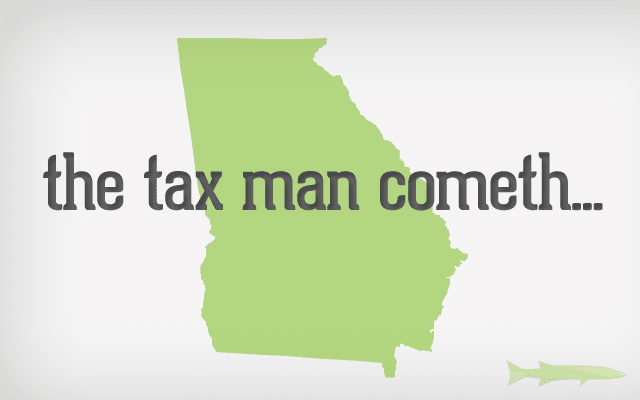
Although web sales are generally thought to be non-taxable, if your client has a physical location they will have to pay sales tax for all of their in-state sales.  Not only are there state taxes to process, there are additional county-based local taxes which have to be accounted for in your e-commerce solution.  I know this sounds like a huge pain, and it somewhat is, but it is a necessary thing to consider in order to ensure that your client does not receive any unnecessary headaches while running their new e-commerce website.

There is however a kink to this process when considering online sales.  Local taxes are county based.  When was the last time you saw a “County” line on a checkout form? Since it is rather unconventional to include a “County” line on your checkout forms, these rates are typically calculated based on the zip codes provided when customers are purchasing items.

SPOILER ALERT!  The remainder of this article deals specifically with Sales Tax issues for the state of Georgia

Georgia Tax Rates for Online Sales

In reviewing this situation for a current project we are working on for a company based in Georgia, we decided to add a 7% tax for all items purchased from within the state of Georgia (4% state tax + 3% Local Tax).  Since there are only 9 counties with a lower local tax rate, we then determined (conservatively) the zip codes for all the counties that had a lower Local Tax rate (2% rather than the traditional 3%).  We then created a negative tax rate criteria for all orders from these zip codes, so when someone made a purchase from a zip code that fell within the lower rate it would reduce the tax amount by 1% (2% in the case of Whitfield County since they only have a 1% local tax bringing the total tax rate to 5%).  We’ve provided a breakdown below of all the Counties and associated zip codes with the lower rates.

Counties & Associated Zip Codes with 2% Tax Rate

Bibb County

  • 31201
  • 31204
  • 31206
  • 31216

Burke County

  • 30456
  • 30830

Cherokee County

  • 30114
  • 30115
  • 30183
  • 30188
  • 30189

Cobb County

  • 30008
  • 30060
  • 30062
  • 30064
  • 30066
  • 30067
  • 30068
  • 30069
  • 30080
  • 30082
  • 30106
  • 30126
  • 30144
  • 30152

Fayette County

  • 30214
  • 30215
  • 30269
  • 30290

Glynn County

  • 31520
  • 31522
  • 31523
  • 31525
  • 31527

Greene County

  • 30642
  • 30678

Gwinnett County

  • 30017
  • 30024
  • 30044
  • 30045
  • 30047
  • 30071
  • 30092
  • 30093
  • 30096

Counties and Associated Zip Codes with 1% Tax Rate

Whitfield County

  • 30710
  • 30720
  • 30721
  • 30740


We hope this helps you and maybe saves you a little time!  If you happen to be looking into an e-commerce solution for your own company, we would love to talk with you!  Contact us and we’ll be in touch with you shortly.


Meet Josh Mallard – New LimeCuda Creative Strategist

With party favors, celebratory drinks, and pin the tail on the donkey (yes to all but the last) we welcome Josh Mallard to the LimeCuda team.

Who is this Josh Mallard?

Josh and Blake have been friends for nearly 10 years and have worked together previously on and off the web.  Josh has been doing web design for several years, with the majority of that time spent juggling web design and a full-time job as an accountant.  After starting and running his own company full-time, Josh quickly realized the need for collaboration.  Joining LimeCuda was a natural fit and Blake and Josh both look forward to how the collaboration will push them professionally and creatively.

Josh lives in the Atlanta area, plays the drums, has a wonderful wife, and a black lab. Josh is super-creative and likes to push the limits of design.

How will he fit in at LimeCuda?

The specialties that Josh brings to LimeCuda… creative eye, proficiency with Adobe CS5 (Photoshop et al), a diversity in design approach, and an insider’s understanding of the accounting, photographer, and artist niches.


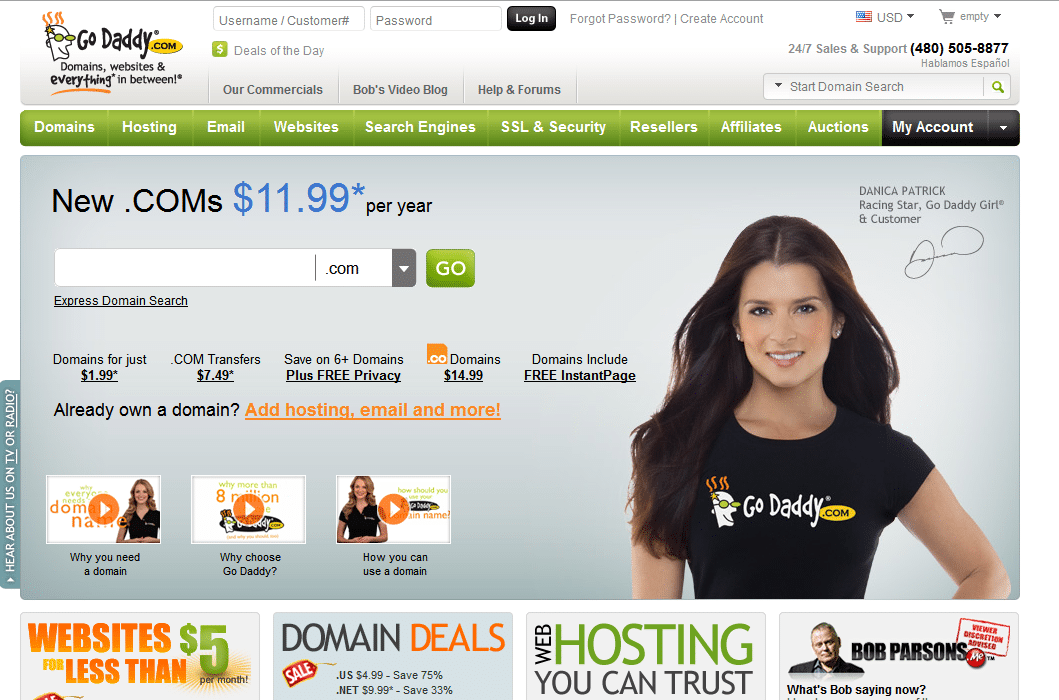
How to Set the Nameservers in GoDaddy

Nameservers are like signs that point the way from your domain to your hosting. I’ve done a quick screencast showing you how to change nameservers in GoDaddy.

LimeCuda uses these nameservers:
NS1.LIMECUDA.COM
NS2.LIMECUDA.COM

Configuring WordPress SEO Plugin on Posts + Pages

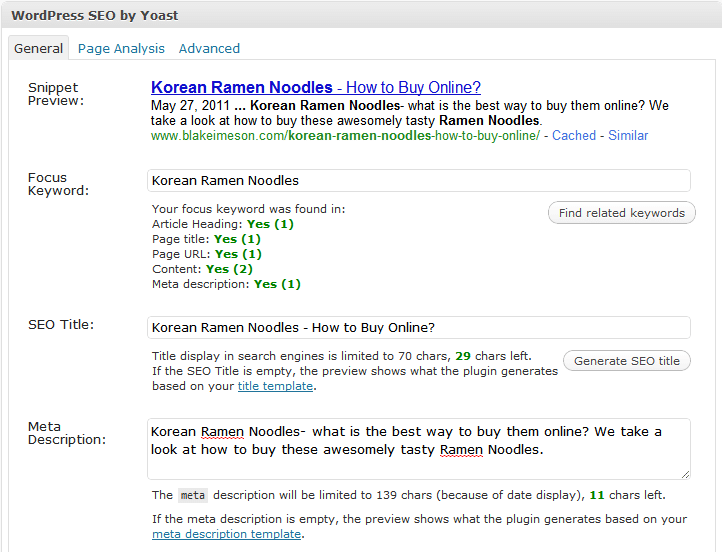
Watch as I quickly go over how to use the powerful WordPress SEO plugin by Yoast on my posts and pages.

We’ve tried many SEO plugins but none are as robust or perfect as this one by Yoast.

Learn how to use it when editing your WordPress Posts + Pages:

I’ll leave you with a couple thoughts (some were in the video)

SEO Title

[arrowlist]

  • Highest value keywords should be towards front of tag
  • Having a longer title with many keywords dilutes the strength of each keyword
  • Use separators like: | – > <
  • The default auto-generation on global settings page. I use %%title%% or %%title%% | %%sitename%%

[/arrowlist]

SEO Description

[arrowlist]

  • Has little SEO value but terms the user searches get bolded
  • Needs to entice the searcher to click thru

[/arrowlist]

Focus Keyword

[arrowlist]

  • Only for your own internal use
  • Only put one keyword/phrase
  • Use this to remind you of where you can naturally use your keyword

[/arrowlist]

Other

[arrowlist]

  • Use /%postname%/ for your permalinks (Settings>>Permalinks) or if concerned about speed and having many posts: /%post_id%/%postname%/
  • This plugin also generates XML sitemaps that you can submit to Google Webmaster Tools
  • Download plugin

[/arrowlist]

Have questions? Send us a message or comment below!

New eBook Released! (Fan Page Exclusive)

LimeCuda just released our first eBook *drumroll*… The Internet Demystified: 8 Essentials to Getting Your Business Online.

A lot of time was spent on this to make very helpful for someone who wants to take a more “Do It Yourself” approach when starting their businesses’ web presence.

The Internet Demystified takes you through the first few steps of starting a website.

limecuda-facebook

To download it just become a fan of our Facebook Fan Page.  (you can always un-fan after you have the eBook)

Enjoy!

Is Buying Links an Effective SEO Strategy?

Our clients often pass us emails from people offering to sell them links. But is link buying an effective and ethical SEO strategy?

Yes and No.

Links drive the web. Google will grant your site trust/authority based on not only the quantity of links pointing to you, but also on the quality. (See PageRank)

Quality of a link to your website depends not only on what links are pointing to the site that is linking to you but also on the relevancy of that site to yours.

If I run a blog on cooking techniques, one link from Martha Stewart is worth several thousand times more than if I have 300 links from sites in some irrelevant industry like classic muscle cars. Unless I am trying to rank for keywords in the muscle car industry but if I am trying to rank for terms in the cooking niche then links from sites already within that niche have far greater power.

pagerank linking

So the bought links may help if they are in the right niches but keep in mind that Google has stated publicly that they do not approve of this practice.

There was recently a very high-profile case of JCPenny getting penalized by Google (also Overstock.com and Forbes) for buying links featured in the NYT.

There are not many effective and safe shortcuts in SEO, while a link vendor may have 1000s of websites that could link to you, they are most likely not high-quality and are also most likely in irrelevant industries. If your site suddenly has several hundred links pointing to them from off-topic sites, then that looks very suspicious to Google. Their algorithm is way too smart to game in a safe way. At best this is gray-hat SEO but I would argue it is black-hat. LimeCuda keeps squeaky clean and white-hat 🙂 If you are looking for the sneaky, under-handed, shortcut SEO then I have a few dozen emails I get daily from those companies I can send you.

Here is what it all boils down to…

Best and safest way to rank well: get people to link to you naturally because you have an awesome product/service or helpful content that gives value.

The Purpose of a Website or: Why Your Site Might Fail

Fair warning, this is a philosophical post.

It’s also a very important post that could have consequences if you have not also philosophized about your site’s purpose. 🙂

When we chat with new clients to get to know them, their business and what the web project entails, we are often struck by how many have not asked themselves,

“Why do I have a website?!?!?”

This seems like a stupidly simple question but it is not.

Often this question has very different answers depending on the business and their industry.

It could be…

  • As an online brochure
  • To allow customers to interface with them online
  • Showcase products
  • Highlight expertise

…And a myriad of other possibilities. But in the end, the reason for a website is probably not dissimilar to the purpose of a business (from Peter Drucker)…

To find and keep customers

If we apply that to a business’s web presence then your web efforts need to help you find and keep customers. Or from an Inbound Marketing perspective, help your customers find you!

Ask yourself:

  • Is my site findable to my audience?
  • Am I able to monitor site traffic from that audience?
  • What is the goal I have for that audience? (the conversion question) [hint: could be sending you a message, picking up the phone, subscribing…]

The answers to these questions will guide what your site looks like, what functionality it needs to have, and what tools like blogging and social media you really need.  Don’t get online just because it is fashionable. Have a purpose and a goal for it to help your business.

Ancient Chinese Web Proverb: “If you have no goals, results, or plan for your site…they are sure to be answered”.