Cross-Posting Your Blog Content on LinkedIn or Medium


LinkedIn and Medium can be great audience-reaching platforms… but you may already be publishing great content on your own website. Should you Cross-Post the same piece on both?
Any Linkedin member can self-publish a piece of content that gets exposure in LinkedIn’s system. Same goes for Medium; people love it for its easy-to-use interface and platform exposure.
What is Cross-Posting?
Cross-Posting is simply taking a piece of content and publishing it on two separate sites or platforms. Could be a great way to get your wise words in front of a bigger audience.
Keep in Mind with Platform Posting…
Will it Rank? (Search Engine Optimization)
If you are going to cross-post you may want to think about the potential for ranking in Google. Decide if ranking is key and if it is then how you approach posting needs to be strategic.
There is no Google penalty for duplicate content. However, certainly the piece Google views as a copy or less authoritative will have a harder time ranking. Definitionally, both posts are competing against each other as well. Ironically (and irritatingly), when researching for this post I stumbled on an article posted on several different platforms.
Analytics and Tracking are Minimal
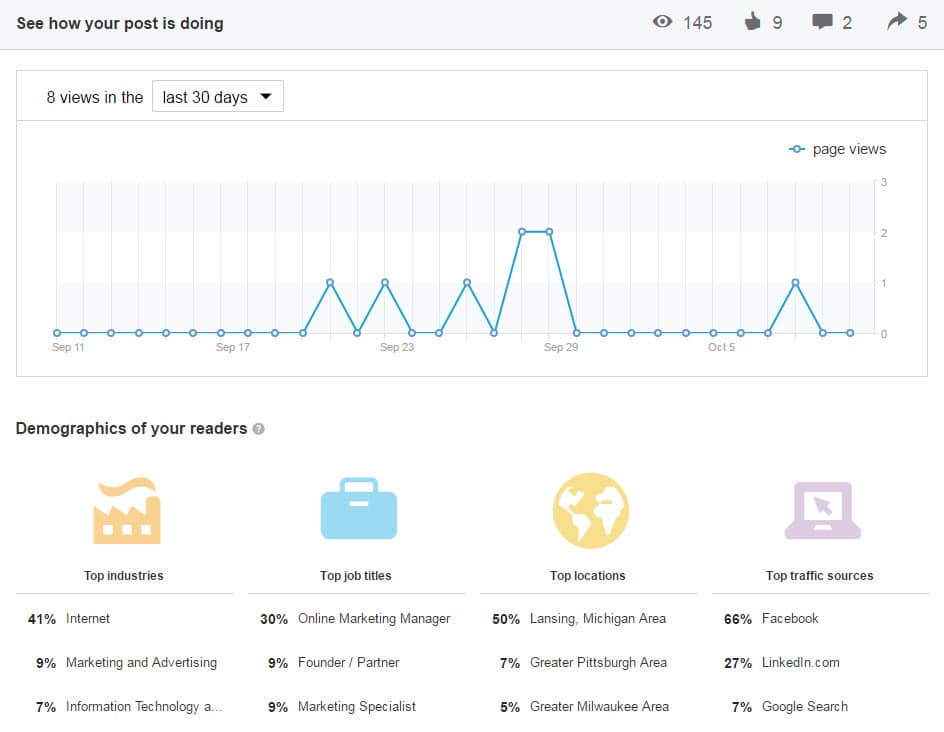
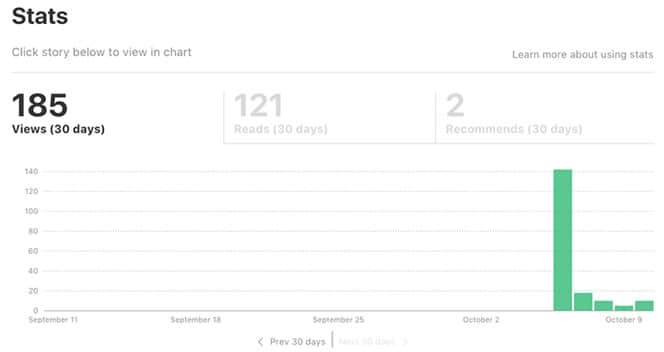
When you post on LinkedIn or Medium you get precious little in terms of analytics.
May Limit Strategic Site Goals
If a reader is on LinkedIn or Medium, they aren’t on your site! Your ability to keep them navigating around and digging deeper is limited to the content within the post. The navigation, related articles, distracting ads… they’re all the platform’s, not your site. You’ll also need to decide which post you share and promote on other Social Media like: Twitter, Google+, and Facebook.
Your Network Has Power
If you have hundred of followers on Linkedin or Medium then it is likely the content will get some love. If you have a minimal network you could just be shouting into the abyss. If the piece is well-written and considered worthy it could even get promoted to LinkedIn Pulse or Medium’s Editors’ Picks.
5 Tactics to Cross-Post Correctly
1. Time-delay the Second Posting
Delay the second posting. Perhaps by a week or two. This will give Google a bit of time to find and assess the first post and clearly understand that it came first in time.
2. Link to the Other Post
Towards the beginning or the end have a line that says something like “This post originally appeared on…”.
I like to use italics and have some keywords linked. e.g
This article Your Obligation to People Visiting Your Web “House” was originally posted on LinkedIn.
3. Rewrite and Reuse
If you take the post and rewrite it sufficiently it may be seen by Google as unique content. You could perhaps tailor each post to the audience and platform.
It’s a great idea to rewrite the title and the content to target a slightly different keyphrase.
4. Give an Excerpt
You may want to use the secondary posting as a teaser to drive traffic to the first. You could put half of the article on LinkedIn for instance and give a link at the end to keep reading on your website. Give away enough good thoughts to keep them interested and coming to your site.
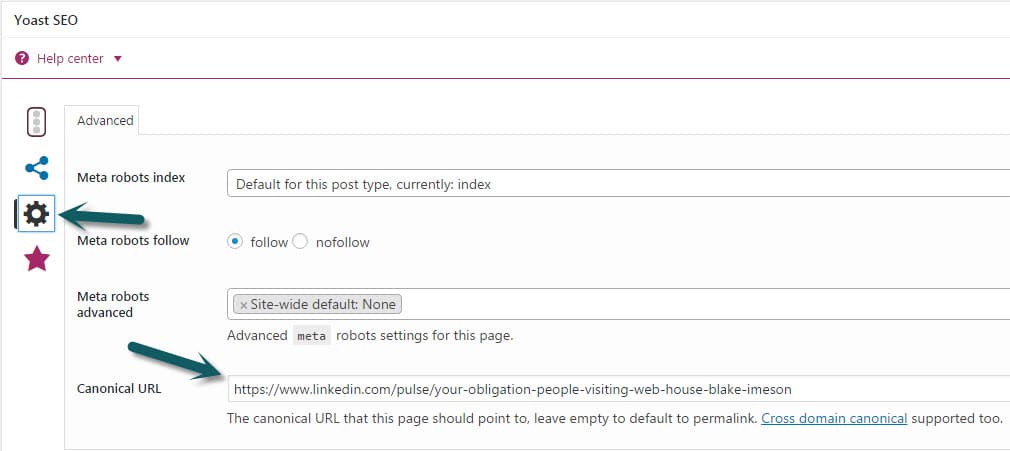
5. Use Your Blog’s Canonical Tag
If you’ve decided to let the LinkedIn post be the Search Engine golden boy then set the canonical tag for your own site’s post to be the LinkedIn post’s URL
My Recommendation for Cross-Posting…
Cross-Post in moderation. Some pieces will work really well on a secondary platform and some will not. For LinkedIn it seems to me business-related pieces of a more philosophical or anecdotal nature do really well.
If ranking is important, my preference would be first publishing to your own website and then waiting to publish on the platform with a link to the original post.