In this final post of the series we dive into the rankings and strategy of building a new website. Part 1 was on Branding & Design, Part 2 was on Sitemap & Content.
Rankings & Strategy
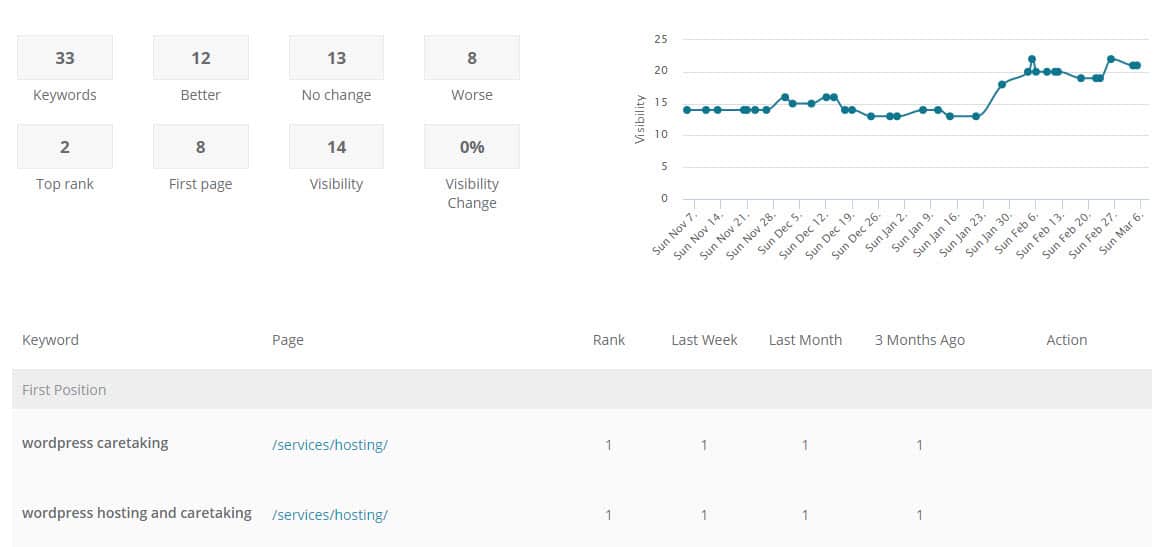
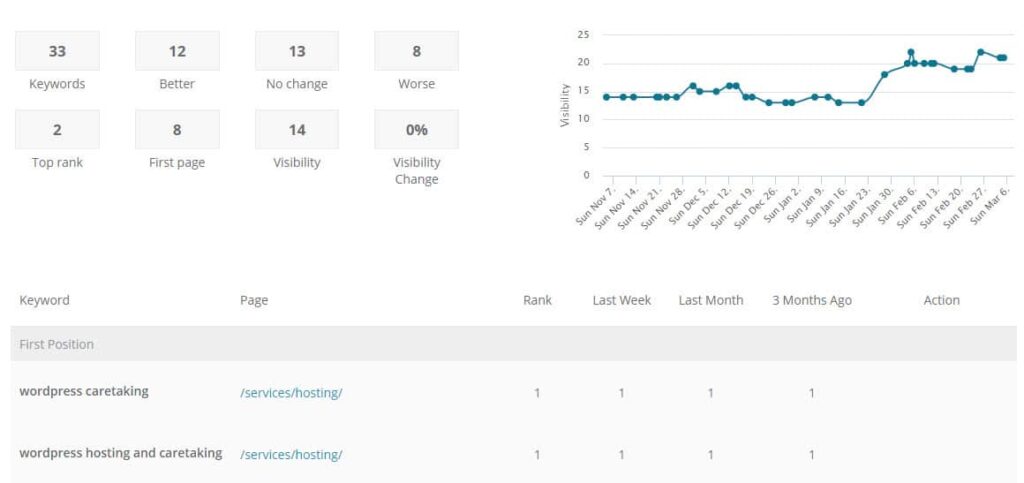
SEARCH ENGINE OPTIMIZATION We recommend starting to think about the phrases for which you should be ranking in Google. When identifying keywords think about…
Competition – are there other big sites already ranking for the term?
Volume – how often the term might be searched
Relevance – the more specific the keyphrase the lower the competition but the lower the volume as well (generally)
Especially early on, we recommend striving to rank for the most relevant and specific keywords. There will be less traffic, true, but it is better traffic! The competition should be lower as well so gaining traction with rankings is doable.
SOCIAL MEDIA Are there Social Media pages to which you need to link? Should you be encouraging your content to be shared anywhere? e.g. LinkedIn, Facebook, Twitter, Instagram, Pinterest, etc.
EMAIL MARKETING Email is still the most effective tool in most online marketing toolkits. You may need to consider how you will collect email signups and what service you will use to send and track bulk email.
One of our favorite tools for email marketing is MailChimp.
STRATEGY Hopefully you started this whole journey considering the website’s purpose and strategy; that determines all the above and a lot of what we went over in our two previous posts. (Part 1: Branding & Design, Part 2: Sitemap & Content.
The final step is figuring out what you are going to consider a “conversion” or success on the site. A good technique is to ask yourself “what would success on the site look like 5 years from now?” and then work backwards so you have somewhere to start working and an idea for what to track.
Assemble a list of what you will consider a success / conversion. Here are some ideas:
Submitting a Contact Form
Signing up for email list
Calling and speaking to someone
Liking a Social Media page
Downloading a whitepaper or an E-Book
Filling out some sort of form
There is much to think about when building a new web presence from the ground up. It is exhilarating but can be daunting. Take it in small bites and consider it a continually evolving tool.
Looking for experts to come alongside you? Contact us, we love assembling potent web strategy plans.
Launching a new website can feel like earning a degree or having a baby. It is a big deal and you beam with pride and people are generally happy and encouraging.
A website launch can be a great marketing opportunity, here’s how to NOT let it go to waste. Here are our best website launch ideas gleaned from hundreds of launches,
Let People Know About Your New Look
If you have people that come to your website often, it might help to ease them into a new and unfamiliar experience. Change can be a great thing but (often) people don’t like change.
Launch Ideas to Spread the News
Make sure to build the excitement internally first! Share the new website launch company-wide first and your employees can become a “street team” for also sharing in the following action items.
Email people – this can be one-by-one to your closest clients and peers or more generally to an email list
Write a blog post announcing the site launch. You can then link to this in your email from above
Share the news on Social Media (LinkedIn, Facebook, Twitter)
Add a link in your email signature mentioning the launch
Is there local or industry PR you could reap? (think chamber of commerce, local newspapers, and industry associations)
Try a good ol’ Press Release
Don’t forget stakeholders, vendors, and collaborating companies!
It might even be good for buy-in to ask for feedback at different stages of a launch.
Having a new site is a great excuse to reconnect with customers or people you haven’t touched base with in ages. In relationship marketing, having legitimate touchpoints is so helpful. People want to know you care about them and most people are truly encouraging if things are going well for you.
Commemorate the Launch Occasion
Your new website was a big investment for your team in terms of planning, building, and launching – at all points, your team was likely very involved in the process. There is a lot of emotional investment from all the blood (hopefully not!), sweat, and tears. So make a big deal of this occasion.
We really don’t recommend breaking a bottle of champagne over a laptop…
However, it might be a great excuse to throw a company party or at least break out some cupcakes. One recent launch the company held an employee picnic complete with silly games, cupcakes, t-shirts, and company-branded sunglasses!
Don’t Be Afraid to Communicate the “Why” for Your New Website
What you do with communicating “why you rebuilt your website” will vary by industry. Our industry and personal preference tends toward the highly transparent side. For example, maybe you built your site to reach new customers or target market. Or maybe you realized your old site wasn’t doing everything it could to best serve your existing ones.
Don’t be afraid to point out the new areas that you worked hard to improve. Here are some to jumpstart your thinking….
Better mobile or tablet experience for the X% of your traffic that is using a smaller screen device.
Product lines or service offerings changed?
Easier ways to contact the right person
Added an area of documentation or FAQs?
Do you now have a blog or an email blast list?
Timeline of a Well-Executed Website Launch
Like a wedding or birthday party, what you do before and after execution is almost as important as the actual event. Here is how our agency tends to approach launches:
1. Pre-Launch Teasing It might be fun to share coming soon notes on Social Media or in email newsletters. Make this fun, use memes, clever graphics, and show some humanity gosh darnit.
2. Pre-Launch Review This is when your key team is reviewing the website and making sure the messaging is on-point, there are no glaring spelling errors or broken user paths. This is a great opportunity to get more of the company that wasn’t directly involved in the process invested in the new site and excited about the new website that is about to launch.
3. Soft Launch Your technical team (maybe us!) will actually stand up the new site. For some launches there is a period of DNS propagation that can take anywhere from 30min to 48 hours. Our preference is late evening and even Friday night soft launches if possible In the Soft Launch period you might send the link to a wider circle of employees, key partners, and your best customers.
4. Launch! This is the day you really start to make noise! Host your party, share the news, get pumped up.
5. Post Launch Make sure to quickly squash the inevitable spelling errors and bugs that crop up. Monitor the analytics. And then keep improving the site – don’t let it go stale!
Bonus: Our team works off of a massive launch checklist (we’ll share soon!) but one thing to make sure you do is to make note of the launch date so you can compare traffic, leads, etc. We usually make an annotation in the Google Analytics for the website launch.
Use your website launch to boost your company’s energy level, self-esteem, and client relationships. Have ideas to share? Please comment below.
Building a website in a linear way fails to meet the essential purpose of a website…
Approaching your website with technical or design aspects first is not as effective as starting with end goals and working everything towards those.
Begin with the end in mind
Write down the essential end-results the site is supposed to accomplish. These are likely similar goals to your business in general. A few examples to help jump start the process…
Gain more customers
Serve existing customers
Then move a level deeper to…
Specific Website End Goals
Communicate to a visitor the pain your company solves or the need it fills
Get people to sign up for your email list
Download a whitepaper
Contact you (form, email, phone)
Submit a support request
Once you have identified the things you want to happen, the rest falls into place. It is only at this point that you can properly fill in all the other site requirements to make sure these items are met. Aspects like…
Make sure the site loads quickly
Have content that drives traffic to get people viewing
Intentional layouts that make sure the important goals are met
We love helping companies come up with an end-to-end strategy for a website rebuild. Send us a message and we’d be happy to chat about your situation.
Pursue these common missed website opportunities and find sweet success with your online efforts.
1. Missing Strategy / Being Thought-less
I’m reminded of the classic line asked of you while checking out at the grocery store: “Did you find everything ok?”. Great, I’ve got 6 anxious people behind me in line and now is the time to help me locate curry powder?
We see companies forming their web presences in the same manner. You need to have thoughtful strategic intent behind every part of your website.
2. Forgetting to Track Traffic or Analyze It
It never ceases to amaze me when I discover a new client has never looked at their analytics or, even worse, has none at all.
It would be like a running a restaurant with the lights out. You wouldn’t know if the restaurant was busy or not. You can’t tell if potential customers are being served. You have no idea if table 10 got the correct order.
You can’t optimize and improve what you don’t track!
3. Not Pursuing Snappy Site-Speed
How fast a web page loads is key to a great user experience and whether people stick around to dig further. The difference between a 2-second page load and a 4-second page load can massively affect your site success. (Here’s a tool we like to check site speed)
4. Letting the Site’s Content Go Stale
Blogging is hard! (Here you go: 4 Blogging Tips) Your company may be fast-moving so keeping the service and team pages updated is a never-ending chore. But wow, can it make a big difference in how people judge your brand. (Don’t forget Social Media!)
Picture this…you look up a local restaurant. The last post on the restaurant’s Facebook page is from two years ago. Half the items on the menu are no longer made or the price has changed. You’ll likely move on to another restaurant option.
Some firms neglect their websites in the same fashion. Your website is an online representation of your offline brand. It is likely to be one of the first and most important impressions of your brand!
5. Neglecting A/B Testing and Conversion Optimization
This one is hard and the most excusable in this list. However, if you have a sufficient level of traffic and clear next steps (e.g. contact forms, email lists, etc.) there may be huge missed opportunity to improve your pitch.
As always, we’re happy to chat and see if we’d be a great fit to help your firm capture opportunities.
If I were a game show host at this point I would have you go register your guesses. Some of you are thinking… persuasive content, SEO, having an amazing product, flashy graphics, a big spinning logo…
I contend web success is far more straightforward.
The distilled concept would be “thoughtful strategy”
Let’s unpack that basic and obvious set of words with two stories of this done poorly and two stories of thoughtful strategy done right.
[Done Poorly] Antonio’s Pizzeria – Where’s the Phone #?
Antonio has a pizza shop and his homepage is filled with beautiful pictures of his delicious deep dish pizza. However, the reason people come to his site 75% of the time is to literally just get his phone number to call and order. The phone number is buried at the bottom of the site in small text and isn’t clickable on a phone. Major strategic fail.
[Done Poorly] Consulting Firm – No Evidence of Credibility
Bruce runs a small boutique consulting firm that specializes in B2B. He has a lot of fluff on his site that describes what he does but nothing that shows the real world impact he’s had. No testimonials from his happy clients. No Case Studies. He is part of 4 professional organizations but neglected to list any of their logos. Big missed opportunity.
Imagine a talent management agency for actors. This one has a weekly tips email they send out which is filled with tricks to land the next big gig. Knowing that this is a natural and non-threatening Call-To-Action they made this button one of the most obvious items on the page. Once they had an actor’s email they could continue to be in front of them even after they left the site. Big strategic win.
[Done Right] Media Outlet – More Pageviews
Patrick runs a blog that depends on ad revenue from people reading his team’s content. He set out with the goal to increase pageviews and approached it from all sides. He figured out how to make the site load more quickly. He added a related article feature at the bottom of the posts to give someone another article they may want to read. He cut away a bunch of useless distracting page elements to let the more important elements shine. The ad revenue goes way up.
Be Thoughtfully Strategic
Set out the end goals, assemble a thoughtful strategy to accomplish them. Don’t be distracted by shiny objects. Do cut away what isn’t helping you achieve your goals. And make thoughtful strategy sit at the core of your efforts on the web.